
Written by Christian Pilato / Associate Professor / Politecnico di Milano
Francesca Palumbo / Associate Professor / University of Cagliari
Francesco Regazzoni / Associate Professor / University of Amsterdam / Published on March 02, 2026
As cyber-physical systems become central to mobility, industry, and energy infrastructures, Europe’s competitiveness increasingly depends on system-level expertise. The CPS Summer School, traditionally held in Alghero and supported in recent years by INSIDE, has become a stable platform for interdisciplinary training, intellectual exchange, and long-term community building in advanced system design.
Cyber-physical systems (CPS), where computation, communication, and physical processes interact in real time, underpin software-defined vehicles, smart grids, robotics, aerospace platforms, and industrial automation. Designing them requires more than expertise in a single discipline. It demands architectural thinking and the ability to manage trade-offs between performance, safety, power consumption, security, and human interaction.
The CPS Summer School (cps-school.eu) was created to meet this challenge. It has been organized since 2019 by Francesca Palumbo (University of Cagliari), Christian Pilato (Politecnico di Milano), and Francesco Regazzoni (University of Amsterdam & USI Lugano). Over the years, it has become a stable European initiative focused on developing strong system-level skills.
A school with continuity
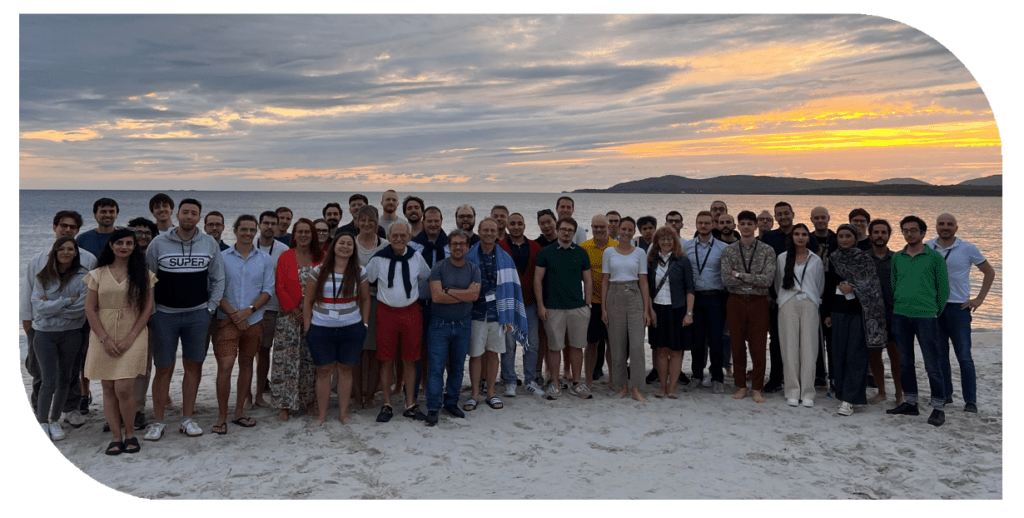
The Summer School is typically hosted in Alghero, Sardinia, which has become its natural home. Apart from one edition in Pula, it has returned to Alghero each year, strengthening both continuity and community over time. This continuity has made the school more than just an annual training event. Many participants return in different roles, first as students, later as speakers, collaborators, or project partners. Ideas discussed during one edition often grow into research projects or industrial cooperation.
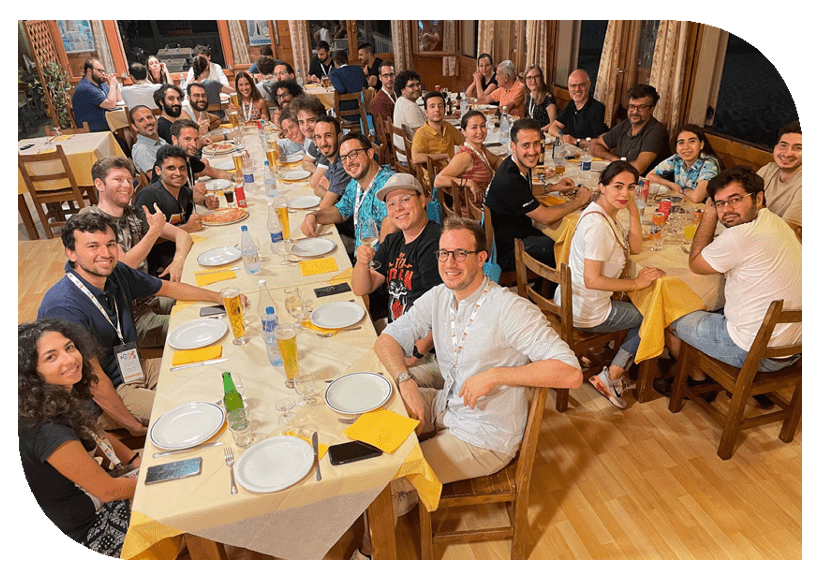
Participation is intentionally limited to around 40 students, creating a focused and interactive environment. This smaller format encourages discussion, direct access to speakers, and stronger peer connections. Over the years, the school has consistently received positive feedback, both for the technical depth of the program and for the quality of the social interactions that help build lasting professional networks.
In recent years, the school has been supported and sponsored by the INSIDE Industry Association. This reflects the strong link between advanced CPS education and Europe’s broader semiconductor and systems strategy. Developing skills is not seen as a side activity, but as a core part of building a strong ecosystem.
Learning to think in systems
The school does not treat hardware, software, AI, and security as separate areas. Instead, it highlights how closely they depend on each other. Topics usually include system modelling, adaptive and low-power architectures, real-time constraints, safety and security in connected systems, and human-in-the-loop design. The goal is not to train narrow specialists, but professionals who can understand and manage interactions across different layers of a system.
The program combines keynote lectures, technical tutorials, interactive sessions, and a PhD workshop. Participants present their research and receive feedback from senior experts. This exchange reflects real-world CPS development, where coordination and integration are often as important as technical performance.
A distinctive element of the school is the participation of Professor Alberto Sangiovanni Vincentelli, who has been involved since the first edition. Starting from the second edition, he has delivered his now traditional “beach note.” These sessions provide broader reflections on system design methods and long-term technological trends, offering continuity across the years.
In addition, the school has welcomed many well-known figures from academia and industry, representing leading European research centres and major industrial players. Their presence keeps discussions closely connected to real challenges while maintaining strong scientific depth.
Strengthening Europe’s skills base
Over the years, the themes of the school have evolved, from CPS fundamentals to topics such as security, adaptivity, energy efficiency, and, more recently, software-defined vehicles and edge AI. However, its main goal has remained the same: helping participants understand and manage system complexity.
The PhD workshop plays an important role in this effort. It gives early-stage researchers a space to present ideas, receive feedback, and connect their work to wider European research activities. The networks built during the school often continue well beyond the event itself.
Three broader lessons can be drawn. First, system-level thinking must be developed early. CPS complexity cannot be addressed only at later stages. Second, building a community supports innovation. The repeated meetings in Alghero have created a stable reference point within Europe’s CPS landscape. Third, education is closely connected to technological sovereignty. Europe’s competitiveness in key technologies depends not only on industrial capacity, but also on engineers who can design integrated, reliable, and secure systems.
The CPS Summer School is not a promotional showcase. It is a long-term effort to strengthen Europe’s expertise in cyber-physical systems. Through continuity of location, committed organizers, recognized intellectual leadership, broad expert participation, and the support of INSIDE, it makes a steady contribution to Europe’s technological future.