

Written by Krzysztof Wołk, PhD / DAC.digital / DAC.next
Jacek Niklewski, PhD / DAC.digital / DAC.next / Published on March 02, 2026
Across Europe, billions of euros flow into research projects every year, but turning prototypes into commercial products remains a stubborn challenge. This article explores how European organizations can bridge the gap – from Horizon-funded labs to actual businesses – with insights from a concrete case and the broader context of EU innovation policy.
A sea of research funding
Europe pours vast resources into R&D. Eurostat estimates that in 2024 the EU spent €403.1 billion on research and development, with R&D expenditure at 2.24% of GDP. At the core of this investment is Horizon Europe, the EU’s flagship framework program for research and innovation (2021-2027). Its overall budget is widely cited as €95.5 billion, while the European Commission’s post–mid-term-review indicative amount for the same period is €93.5 billion. By its halfway point in January 2025, the program had already funded over 15,000 projects with a combined budget of more than €43 billion.
Alongside it, specialised public-private partnerships (PPPs) such as the Chips Joint Undertaking (Chips JU) channel investment into microelectronics, embedded systems, and the wider components-and-systems ecosystem. Chips JU was established in 2023 under the European Chips Act and builds on the former Key Digital Technologies Joint Undertaking (KDT JU). Under the updated framework, the EU contribution is set to increase from €1.8 billion up to €4.175 billion, with a total budget of nearly €11 billion once participating states and private members’ contributions are included. These large-scale programs signal Europe’s ambition to drive digital and green transitions, secure supply chains, and build competitive industries.
Yet, this deluge of funding masks an enduring problem. Simply, too much research stops at the prototype stage. A high-level analysis by the European Commission notes that each euro invested in Horizon Europe could yield up to eleven times its value in GDP by 2045, assuming research gets translated into real-world applications. In practice, however, many publicly funded projects produce technical proofs of concept but struggle to reach commercial deployment. Start-ups and spin-offs spawned by public research often find the valley of death between lab and market treacherous. As EU studies observe, countless brilliant ideas (from AI algorithms to green-energy demos) too often hit a wall on the way to scale and even relocate abroad. In other words, Europe boasts leading science and ideas, but turning them into maintained, scaled solutions in real industrial operations remains a major challenge.
The gap shows up in hard numbers. The European Innovation Scoreboard consistently warns that Europe lags some peers on innovation-intensive outcomes (patents, exports, high-growth firms). Even within the Single Market, 70% of SMEs only serve their home country and just one in four exports to another EU state. Regulatory complexity, fragmented markets, and limited late-stage funding all contribute. A recent opinion by the European Economic and Social Committee bluntly calls for Europe to stop losing its best ideas overseas, noting that many venture founders feel forced to seek investors in Silicon Valley rather than scale up at home. In short, Europe’s research engines are powerful, but the transmission to industrial output often slips.
Crossing the chasm to market
Bridging lab results into industry-grade products requires overcoming what practitioners call the valley of death (the critical phase where a prototype must be validated, certified, and scaled for manufacture). This often means solving new problems (for example, meeting industrial safety standards or dramatically cutting production costs), which the original research grant may not have covered. Firms must therefore secure additional funding (private or public) and new expertise to mature the technology.
Europe has recognized this gap. New initiatives like the European Innovation Council (EIC) Transition and Accelerator schemes explicitly target late-stage development. The EC disseminates support tools (from mentoring to an EU-wide results booster) and encourages projects to prepare detailed exploitation plans. Still, systemic barriers persist. Complex certification rules, lack of scale-up capital, and a conservative manufacturing culture can stall innovation. For instance, the EESC notes that 64% of start-ups cite regulatory burden as a key obstacle, and 39% struggle with delayed payments or slow sales pipelines. High-skilled talent is also scarce. Nearly half of Europe’s growth-oriented SMEs report trouble recruiting engineers and data specialists.
On the brighter side, the same European strategy envisions a “European Research Area” where knowledge flows freely, and an ecosystem links academia, industry, and public purchasers. The EU’s dissemination and exploitation strategy explicitly aims to make Horizon Europe a global reference for transforming research outputs into economic and societal value. In practice, this means rallying every possible enabler (from cluster networks and industry associations to venture capital) around promising projects. It also means rethinking how research is managed and building projects with industry partners from day one, sharing prototypes early with users, and aligning R&D topics with clear market needs (for example, under the EU’s Green Deal or Digital Strategy agendas).
Case Study: D_Box – From prototype to production
An illustrative example of this transition is the D_Box project by DAC.digital, which demonstrates what changes when a funding instrument is selected to match the maturity of the work. D_Box was developed as a product-focused effort under the Polish Agency for Enterprise Development (Polska Agencja Rozwoju Przedsiębiorczości – PARP) programme 2.3.5 “Design for Entrepreneurs” (Design dla przedsiębiorców), and it was framed from the start as a significantly improved, market-ready device dedicated to the milk logistics sector. The project did not aim to produce an R&D demonstrator; it aimed to deliver a deployable product for vehicles collecting milk for dairies, where reliability, safety, and operational continuity matter more than novelty. The starting point was an earlier prototype whose concept proved itself, but whose design was not suitable for industrial roll-out: as the team later documented, “the existing prototype raised safety concerns and prevented us from mass production”.
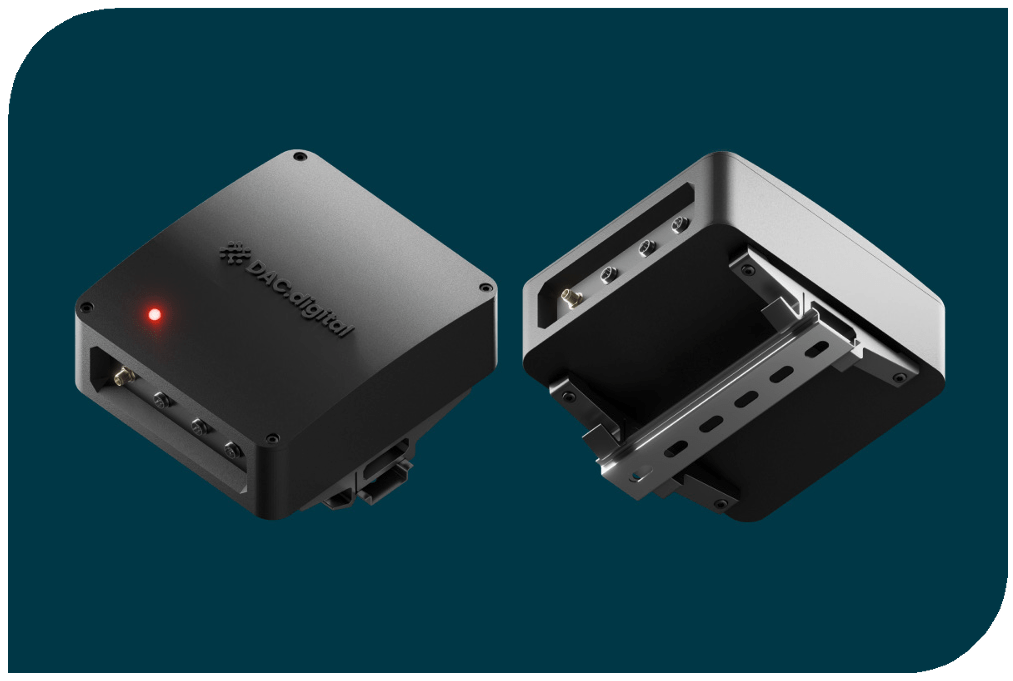
Recognizing the market potential, the team used the PARP 2.3.5 funding to develop a new device from scratch, focusing on design-for-manufacture, safety, and operational robustness rather than research novelty. In DAC.digital’s own account, they “secured a grant to develop a new device from scratch, aiming to create a safer, more reliable, and scalable trusted hardware layer”. The outcome was D_Box – a compact, IoT hardware platform purpose-built for milk-collection fleets with a clear deployment pathway. Later, the device and its trusted-hardware concept could be extended and refined in European collaborative R&D, including the TRANSACT project, where the work focused on further development rather than redefining the original product’s market intent.
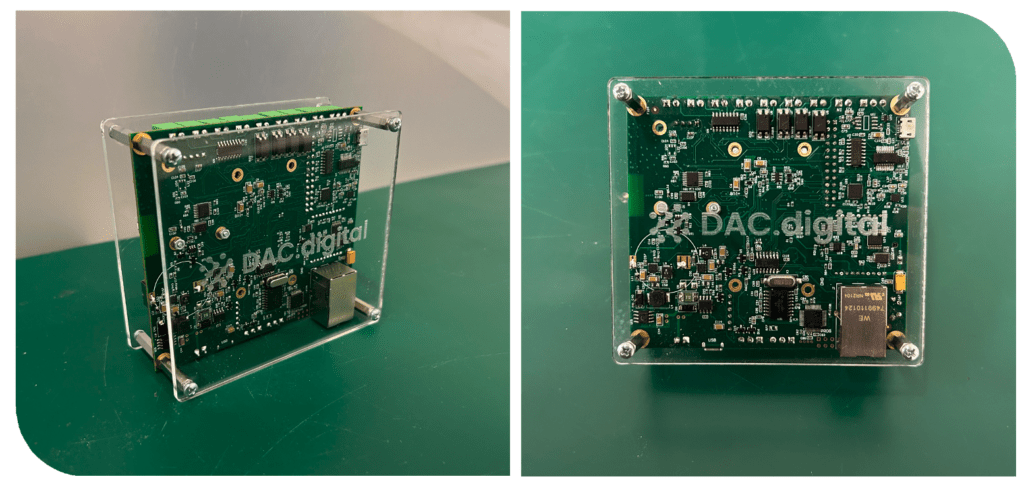
The DAC.digital’s D_Box hardware device integrates sensor interfaces, wireless modules, and a microprocessor in a rugged enclosure, in effect a “trusted hardware layer” for industrial IoT. The new design emphasizes flexibility (it connects via Bluetooth, CAN, I²C, LTE-M, GPS, and more) and can be adapted to different vehicle and machine environments.
At the same time, the platform is engineered so that edge intelligence can be added when a use case requires it, and that matters because industrial systems are gradually shifting from passive monitoring toward more autonomous operation. European policy discussions increasingly describe this direction as Agentic AI. Systems that can interpret events, reason over context, and trigger bounded actions through controlled interfaces while remaining auditable and supervised. In practical engineering terms, that future depends less on a single model and more on dependable device foundations (clean APIs, trustworthy data, and disciplined update mechanisms) so autonomy stays safe in production environments. This is also where DAC.digital’s deep-tech practice aligns with the broader trajectory. Even when a first deployment is intentionally focused on reliable connectivity and trusted data capture, the engineering choices can keep the path open toward Edge AI and controlled autonomy as the operational needs evolve.
With the redesign complete, D_Box went into production. In the milk logistics context (marketed as “MuuBox”), it is deployed on milk collection vehicles. It interfaces with vehicle-mounted metering and temperature instrumentation so dairy operators can see pick-up volumes and cold-chain conditions quickly and consistently, without the friction of manual paperwork. The device is used primarily as a secure telematics and data acquisition gateway, reliably capturing pick- up records and transmitting them to backend systems; local edge processing is not a core feature in that configuration. The case shows how targeted product-development funding, coupled with close attention to operational workflows (drivers, fleet coordinators, and dairy-plant staff), can turn a proven concept into a scaled, maintained system.
Intelligence at the Edge
The D_Box is not an isolated novelty. It exemplifies a broader trend in industry. European strategy documents emphasize edge computing as a key pillar of future tech. A 2023 EU study on thick computing notes that embedding powerful processors directly into machinery and vehicles lets them process complex computational tasks locally, leading to faster reactions and the ability to take automatic decisions on-site. In practical terms, this could mean factory robots diagnosing themselves, cars adjusting routes in real time, or field sensors triggering irrigation without human input. The EU is funding pilots to make this a reality. For instance, €45 million was earmarked under Horizon Europe for cloud-edge IoT demonstrators, and over €250 million has gone into related large-scale projects since 2021.
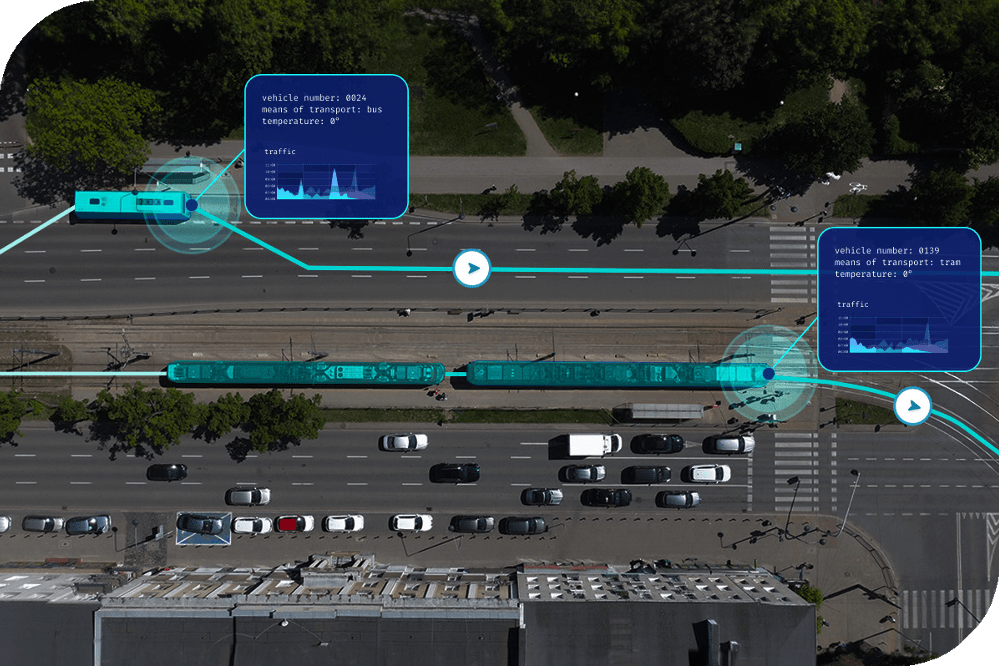
The description above outlines a connected IoT ecosystem. Sensors on vehicles and infrastructure (cameras, environmental monitors, etc.) feed data into distributed platforms that include edge devices like D_Box. Such architectures highlight how data and compute travel from the periphery to back-end systems. In this landscape, the D_Box and similar modules act as local hubs that handle communication and analysis on the spot, making the things themselves become smarter and more autonomous. This shift has important implications. On the one hand, it opens new value chains. European makers of sensors, chips, and industrial hardware can capture more value if they deliver complete edge-enabled solutions. On the other hand, it raises the bar for deployment by building and certifying intelligent devices, which requires new competencies in machine learning, hardware safety, and systems integration. The D_Box case shows one pathway of combining grant-funded development (to solve hardware design hurdles) with software expertise (to implement data handling and connectivity).
The move toward edge intelligence underscores why turning research into innovation isn’t just about physics or engineering research. It’s also about systemic change. It requires updating standards (so novel devices can be approved), re-skilling workers, and developing platforms where different technologies interoperate. The EU’s Digital Strategy explicitly links edge computing to Europe’s competitiveness and digital sovereignty. It points out that sectors like industrial automation, mobility, and healthcare will see growing demand, and European companies already have strengths in these professional IoT fields. The question is how to harness that potential by moving R&D outputs into actual deployments.
Building an innovation ecosystem
The path from the lab to the industrial environment depends on more than the technology itself. It requires an ecosystem where policies, funding instruments, and industry collaboration reinforce one another. In Europe today, several mechanisms exist to support this. Joint Undertakings like Chips JU bring together companies and researchers on strategic R&D, national clusters, and Digital Innovation Hubs foster connections and programs like EIC or Cohesion funds can inject later-stage capital. However, coordination remains uneven. It helps when a project is co-designed with an industrial customer (for example, the D_Box effort was linked to a specific need in the dairy supply chain).
The European Commission is also trying to amplify success stories and share best practices across the Union. It offers results accelerators and matchmaking services to help consortia find partners who can commercialize outputs. In line with Horizon Europe’s new innovation-focused pillar, the Commission now emphasizes demonstration and deployment phases even within research projects. For instance, future calls may require projects to outline scale-up or pilot plans from the start.
Crucially, scale-up success often hinges on SMEs and start-ups, because they are often the teams most capable of turning a research result into a deployable, iterated solution under real constraints. Chips JU inherits the same DNA of structured collaboration between research and industry, and in practice, that means SMEs remain central to how European consortia turn strategic R&D into working technologies. But SMEs need support beyond R&D grants, like incubation, risk financing, and favorable regulations. The recent EESC opinion urges dedicated scaling funds and faster access to Europe’s single market, as well as streamlined hiring of technical talent.
From a European vantage, cooperation across borders is part of the answer. The single market promises that a successful product in one country can rapidly expand to others, but only if all regulatory and technical barriers are addressed. In the case of hardware like D_Box, achieving EU-wide interoperability standards (for radio communication, data privacy, safety, etc.) is critical. Projects that align with broader European initiatives can gain a foothold more quickly.
Finally, it’s important to acknowledge that not all research will or should be commercialized in its original form. Some Horizon projects yield new methods, data sets, or open-source platforms that enrich the innovation landscape indirectly. The goal of exploitation in EU policy is broad. It includes creating spin-off companies, but also influencing standards or enabling further research. In that light, the success of a project is measured in multiple ways. But tangible products that reach manufacturing lines and markets (like the D_Box device now deployed in dairy and industrial plants) are compelling evidence of impact.
Conclusion
Europe has the scientific talent, the funding, and the strategic vision to turn R&D into industrial strength, but achieving this at scale requires aligning many pieces. The lessons from projects like D_Box are illuminating. First, they show that iterative engineering is vital. A lab prototype often needs significant redesign to meet industrial constraints, and that redesign may only be possible with follow-on funding or partnership. Second, they underline the importance of meeting real needs. D_Box was born from an actual problem (manual milk tracking), and its designers worked closely with users to make it valuable. Third, the case illustrates the power of combining software and hardware innovation. The hybrid nature of modern products (sensors + connectivity + intelligence) means breakthroughs often come at intersection points.
From a policy standpoint, the D_Box story supports a blended-instrument approach rather than a single silver bullet. Productisation often benefits from national programmes that explicitly fund design-for-manufacture and market entry, while EU-level programmes such as Horizon Europe and Chips JU can extend the technology frontier, de-risk cross-border interoperability, and support follow-on development in collaborative R&D settings. When these instruments complement one another, it becomes easier to move from a working deployment to broader industrial innovation that Europe can retain and scale, without forcing every step of the journey into a single programme’s logic.
Looking ahead, Europe’s challenge is to scale this model and to do it fast enough that the next wave of industrial software does not remain trapped in demonstrations. That wave is increasingly defined by systems that do more than analyse. They can pursue operational goals, coordinate actions across tools, and adapt in context, especially when paired with dependable device and data foundations. The Commission has started to describe this direction explicitly under the umbrella of Agentic AI, and for industry, it raises the bar that deployment is no longer only about model accuracy, but also about interfaces, observability, safety constraints, and the ability to take bounded action in commercial environments.
This is precisely where “project to deployment” discipline becomes strategic. If telemetry is unreliable, update mechanisms immature, or integrations brittle, autonomy turns from opportunity into risk. When the foundations are solid, innovation can compound, a productised device layer can support real operations today, and later become the substrate for Edge AI and controlled autonomy as requirements evolve. That logic (product first, then iterative deep-tech development through European collaboration such as TRANSACT) is also how DAC.digital approaches work in this space, staying aligned with the trajectory of industrial AI while keeping deployments grounded in operational reality.
This is where the project-to-deployment discipline becomes even more important. If the inputs are messy, the APIs are brittle, the device layer is unstable, or the update mechanisms are immature, autonomy turns from opportunity into risk. The D_Box journey illustrates a practical way to prepare for that future. Treat the edge layer as a product-grade foundation, design for maintainability and secure integration, and make the system ready for incremental capabilities rather than one-off pilots. It is also why teams like DAC. digital increasingly think in terms of end-to-end engineering systems (not just prototypes) when they join European consortia.
In practical terms, solutions may include more moonshot projects that jointly fund research, demonstration, and scaling (as envisaged by recent EU proposals), or embedding SME champions in research consortia. They may also involve a smarter use of EU funds. For example, deploying European Structural and Investment Funds alongside Horizon grants in regions that have strong industrial ecosystems.
The European perspective (a large, interconnected market with ambitious climate and digital targets) is both an asset and a test. Europe can only reap the full benefits of its €400+ billion R&D investment if it ensures that projects do not stall on the desk of a grant manager or the bench of a professor. The answer will come from experience (like D_Box’s journey), policy learning (as the EU’s uptake strategy matures), and continuous dialogue with industry. If Europe succeeds, it will strengthen its factories, create high-skilled jobs, and make its research investment truly count in global innovation. The next step is moving from connected industrial systems to systems that can pursue goals and trigger actions safely and transparently using Agentic AI. The practical lesson from D_Box is that this future depends less on slogans and more on engineering fundamentals. Dependable edge foundations, clean interfaces, and deployment-grade operations that make autonomy possible without making it fragile.
Sources
- https://research-and-innovation.ec.europa. eu/funding/funding-opportunities/funding-programmes-and-open-calls/horizon-europe_en
- https://ec.europa.eu/info/funding-tenders/ opportunities/portal/screen/programmes/ horizon
- https://ec.europa.eu/commission/ presscorner/detail/en/ip_25_1115
- https://www.chips-ju.europa.eu/News-detail/?id=1647bda6-99d1-ee11-9078-0022489e2eca
- https://joint-research-centre.ec.europa. eu/jrc-news-and-updates/eu-channels-eu207-billion-digital-decade-targets-and-objectives-2025-06-16_en
- https://ec.europa.eu/eurostat/web/ products-eurostat-news/w/ddn-20251204-2
- https://dac.digital/case-studies/how-we-turned-a-prototype-into-a-working-trusted-hardware-layer-for-milk-industry/
- https://dac.digital/our-products/d_box/
- https://muumap.com/
- https://ec.europa.eu/commission/ presscorner/detail/en/ip_25_2299
- https://eur-lex.europa.eu/legal-content/ EN/TXT/PDF/?uri=CELEX:52025DC0835
- https://www.consilium.europa.eu/en/ policies/eu-chips-industry/
- https://european-union.europa.eu/ institutions-law-budget/institutions-and-bodies/search-all-eu-institutions-and-bodies/chips-joint-undertaking_en