Written by Karl-Johan Gramner / Sinetiq / Published on June 24, 2026
As digital systems become increasingly interconnected, integration is no longer a secondary technical concern. It has become a strategic capability. Across industry, public services, and research-driven environments, organisations depend on complex landscapes of applications, services, platforms, and data flows. Yet in many cases, the ability to integrate these systems remains fragile, slow, and difficult to govern.
This challenge is particularly visible in organisations operating across multiple teams, suppliers, or legacy environments.
APIs are often developed in parallel, without cross boundary synchronization, resulting in limited alignment and reuse. Interface issues are discovered late, sometimes only when systems are already being connected. Visibility into deployed services, ownership, versions, and runtime behaviour is frequently incomplete. The result is familiar: duplicated work, delayed delivery, inconsistent quality, and hidden operational risk.
For Europe’s digital and industrial ecosystem, this is not a marginal issue. Interoperability, resilience, and controlled yet flexible futureproof system evolution are increasingly central to competitiveness. As digital infrastructures expand across sectors, the quality of integration becomes a determining factor in whether innovation can scale reliably.
Integration problems are often organisational problems in technical form
When integration fails, the symptoms usually appear technical. Interfaces do not match. Documentation is incomplete. Dependencies are unclear. Deployment reveals incompatibilities that were not visible in development. Yet these visible issues often reflect deeper structural challenges. A common problem is lack of visibility. Teams may not know which APIs already exist, who owns them, which version is active, or how services are being used in practice. In such environments, reuse becomes difficult and duplication becomes almost inevitable.
Timing is another critical factor. When interface validation happens late in the development process, small inconsistencies can trigger costly cycles of rework and coordination. By the time systems reach integration testing, the cost of correction is already high. A third issue is the growing difficulty of change. Systems are expected to evolve continuously, but their integration models are often too opaque or too rigid to support controlled adaptation. This becomes especially problematic in environments where security, traceability, and operational continuity must coexist.
Seen from this perspective, integration is not simply about connecting systems successfully. It is about creating the conditions under which systems can evolve with confidence.
Why governance matters more as complexity grows
API governance is sometimes perceived as a constraint, an additional layer of control imposed on development teams. In practice, effective governance does the opposite. It reduces uncertainty, improves visibility, and allows teams to move faster with fewer surprises. In complex environments, governance becomes valuable when it connects design intent, ownership, lifecycle,
and implementation. API specifications, deployed services, and runtime behaviour are too often treated as separate concerns. When they remain disconnected, organisations lose the ability to understand what was designed, what was implemented, and what is actually running.
A governance-oriented approach helps restore that continuity. It creates a reliable view of active interfaces and their evolution over time, while supporting stronger traceability. This makes it easier to manage versions, reduce duplication, and align delivery with architectural intent. In large organisations and distributed ecosystems, this becomes essential. Interoperability depends not only on technical quality, but also on shared understanding. Governance, in this sense, is not a bureaucratic layer, it is a practical enabler of coherence.
Interface validation shifts quality upstream
If governance provides visibility, interface validation provides confidence. The earlier organisations can detect mismatches, the lower the cost of correction and the lower the risk of cascading delays. Interface- first approaches play a key role here. By validating APIs independently of full system integration, teams can detect and resolve issues within their own environments before they become cross-organisational problems. Provider and consumer behaviour can be simulated, dependencies can be mocked, and assumptions can be tested earlier in the lifecycle.
This fundamentally changes development dynamics. It reduces the number of integration cycles, shortens the path to production, and improves predictability across teams. Instead of discovering issues when multiple systems are already coupled, organisations can surface them earlier, when they are still manageable. In environments with many interfaces and evolving service landscapes, early validation also reduces friction between teams. It supports a more modular delivery model, where progress does not depend entirely on the readiness of every connected system. The value is not only speed. It is the ability to improve delivery quality without relying on late-stage troubleshooting to reveal structural weaknesses.
From isolated fixes to integration agility
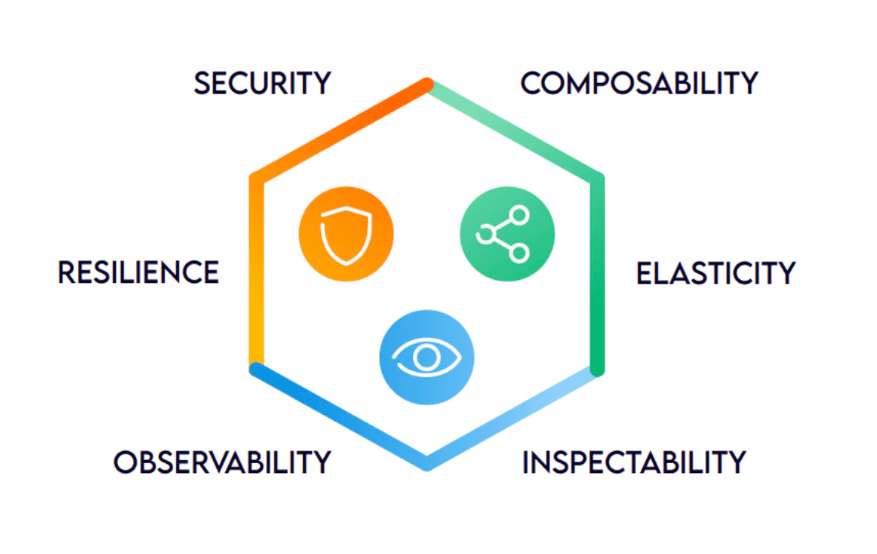
A useful way to frame this challenge is through the concept of integration agility. The key question is not only whether systems can be connected, but whether they can adapt to change in a controlled and sustainable way. This requires a broader perspective than API design alone. It includes the ability to inspect systems, observe behaviour, secure interactions, manage dependencies, and respond to failures with minimal friction. Integration quality depends on a wider
set of system characteristics, including composability, elasticity, inspectability, observability, resilience, and security.
These dimensions matter because integration is never static. Systems evolve, services are replaced, interfaces change, and operational contexts shift. Organisations that manage this effectively are not necessarily those with the most advanced technologies, but those with the clearest structures for handling change. This perspective is particularly relevant in Europe’s current digital landscape, where interoperability, resilience, and technological sovereignty are increasingly interconnected. Systems that can reliably share services and data are better positioned to support both innovation and long-term stability.
Making system landscapes visible again
One of the recurring challenges in modern IT environments is the gradual loss of visibility. Documentation drifts, runtime reality diverges from architectural models, and ownership becomes fragmented. Over time, the system landscape becomes harder to understand and manage. Restoring visibility is therefore not simply an operational improvement, it is a prerequisite for better decision-making. Organisations need to know what exists, what is active, what is reused, and where risks are concentrated.
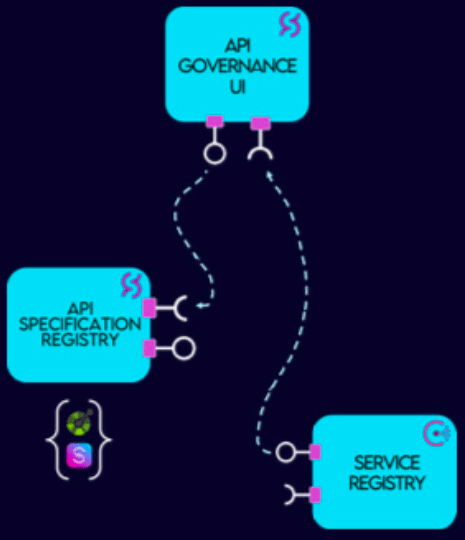
Approaches that combine specification registries, service registries, and governance interfaces are particularly valuable in this context. They help create continuity across the lifecycle from contract to implementation to runtime enabling more informed decisions and reducing hidden complexity. The same applies to testing and validation environments. When interfaces can be simulated and verified early, teams gain a clearer understanding of how change will propagate. This strengthens both delivery confidence and operational readiness.
A strategic capability, not just a tooling issue
Ultimately, integration quality is not just a tooling concern. It is an organisational capability with strategic implications. When
governance is weak and validation is delayed, complexity accumulates silently. Delivery slows, costs increase, and risks become harder to identify. By contrast, organisations that treat API governance and interface validation as integral parts of
system architecture create better conditions for speed, reuse, and resilience. This does not eliminate complexity but it makes it more visible, more structured, and more manageable.
For Europe’s innovation ecosystem, this distinction is becoming increasingly important. As digital systems grow more
interconnected across sectors and borders, the ability to govern interfaces and validate integration early will play a key role in transforming technological potential into reliable deployment.
Conclusion
Digital transformation is often framed in terms of platforms, data, artificial intelligence, or cloud infrastructure. Yet many of the practical barriers to progress emerge at the level of integration where systems meet, where interfaces fail, and where organisational complexity becomes technical friction. API governance and interface validation therefore deserve greater strategic attention. They are not peripheral technical functions, but essential components of the infrastructure that allows digital systems to evolve safely, predictably, and at scale.
For organisations navigating increasingly complex system landscapes, the challenge is no longer simply to connect technologies. It is to do so in a way that preserves visibility, supports change, and reduces uncertainty over time. In this context, integration agility is not just a technical objective, it is a condition for resilient innovation.
This perspective reflects the growing importance of structured integration practices, an area in which Sinetiq are
actively contributing through governance and validation-focused approaches, including tools, methods and supporting consultancy services. Specifically, the abilities described above are provided by the Sinetiq products API Governance Tool (AGT), Extensible Test Tool (xTT) and Integration Agility Assessment (IAA).